

Create transparency
Three real levers
In market communication, transparency does not determine whether processes run technically, but how capable specialist departments are in their day-to-day business.
Following the switch to SAP S/4HANA in the energy industry, market processes are exposed to a new technological architecture. Status information is distributed across various systems and interfaces. At the same time, regulatory requirements are constantly increasing. As a result, the technical context no longer arises automatically. It is often difficult to recognize processes that have come to a standstill. Once they are identified, troubleshooting begins and this often requires in-depth expert knowledge. Transparency therefore becomes a decisive success factor.

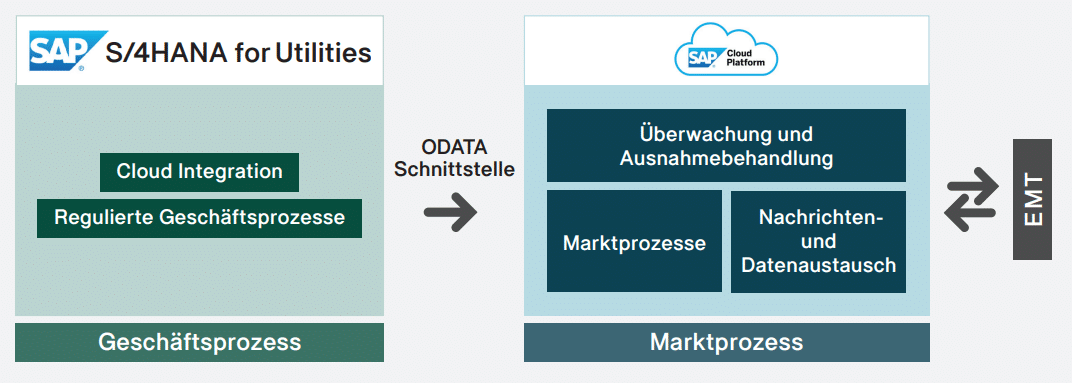
What transparency means in technical terms
If this classification is missing, market communication becomes reactive. Clarification cases remain open for longer, priorities become blurred and decisions depend on the right specialist knowledge. Under these conditions, transparency is not a convenience function, but the prerequisite for being able to control market processes at all.
Transparency does not mean being able to see every technical status. Transparency means that specialist departments can categorize a market process from a technical perspective in just a few steps: Where does it stand? Is the deviation relevant? And what are the consequences for operations?
Only when this classification is possible can clarification cases be prioritized, risks assessed and deadlines actively managed, even under time pressure.
Three concrete levers to create transparency

Realistically assess your own status:

Define market processes end-to-end, independent of the system
Before transparency can be created technically, it must be clear where a process begins and ends and when it is considered conspicuous. Process owners should describe their market communication processes end-to-end: with clear start and end points, technical status transitions and defined deviations. Not at a technical level, but from an operational perspective.
Define technical responsibility for deviations
Transparency is not only created through visibility, but also through responsibility. For every relevant process, it must be clear who is technically responsible if it deviates from the norm. Without this clarity, anomalies remain visible but without consequences and transparency fizzles out in everyday life.


Turning individual signals into an overall technical view
With the new technology, there are many status messages, but little orientation. Specialist departments should define which information is really relevant for decision-making and how it belongs together. Data only becomes transparent through aggregation, chronological classification and comparison with the normal case.
The more distributed systems and processes become, the less transparency arises by itself. For specialist departments, this determines whether market communication is actively controlled or whether it is merely reactive.
Those who understand transparency as a technical task at an early stage create the basis for stable, controllable operations after S/4HANA. Not as a tool issue, but as a daily work facilitation.
Stay on topic, further practical perspectives in the newsletter .
 English
  Deutsch